Deepfake Technology Challenges Content Verification
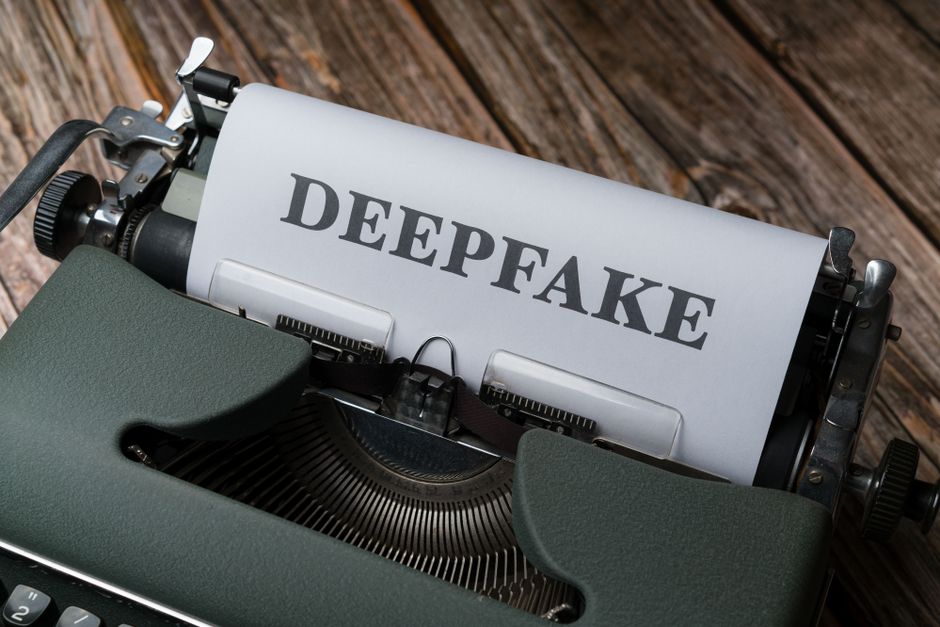
Deepfake technology has advanced rapidly in recent years, enabling the creation of highly realistic synthetic media that can be difficult to distinguish from authentic content. These techniques, which often rely on machine learning models such as generative adversarial networks, can manipulate video, audio, and images in ways that are increasingly convincing to both human observers and automated systems. As a result, the ability to verify the authenticity of digital content has become a pressing concern for platforms, journalists, and the public.
The challenge is not solely technical; it also involves social, ethical, and regulatory dimensions. Verification processes must contend with the speed at which manipulated media can spread, the varying quality of detection tools, and the absence of universal standards for what constitutes sufficient proof of authenticity. In the United States, these issues intersect with existing legal frameworks and platform policies, creating a complex landscape for stakeholders to navigate.
This article explores the current state of deepfake creation and detection, the obstacles to reliable content verification, and the broader implications for information integrity. It does not offer definitive solutions but rather outlines the key considerations and approaches that are being discussed and tested.
Understanding Deepfake Creation Techniques
Deepfake creation generally involves training neural networks on large datasets of real media to learn patterns of appearance and motion. Once trained, these models can generate new content that mimics the original subject. Common methods include autoencoders, generative adversarial networks, and more recently, diffusion models. Each approach has its own strengths and weaknesses in terms of output quality, computational requirements, and ease of use.
The tools for creating deepfakes have become more accessible, with open-source software and cloud-based services lowering the barrier to entry. This democratization has positive applications in entertainment and education, but it also increases the potential for misuse. For example, a user with limited technical expertise can now produce a convincing face swap or voice clone with relatively little effort.
Detection methods often focus on artifacts or inconsistencies that arise during the generation process. These can include unnatural blinking patterns, mismatched lighting, or subtle frequency-domain anomalies. However, as generation techniques improve, such artifacts are becoming less pronounced, making detection more difficult. Researchers are continually developing new approaches, but the rapid pace of advancement means that detection tools can quickly become outdated.
Transparency in the development and deployment of deepfake detection tools is essential for building trust and enabling informed decisions.
Challenges in Content Verification
Content verification involves determining whether a piece of media is authentic, manipulated, or entirely synthetic. This process is complicated by the fact that manipulation can occur at various stages, from capture to editing to distribution. A video might be real but edited to change its meaning, or it might be entirely generated. Verifiers must consider the provenance of the content, the integrity of the chain of custody, and the reliability of any metadata.
One major challenge is the lack of standardized metadata and digital signatures. While some cameras and editing software embed provenance information, it can be stripped or altered. Initiatives such as the Coalition for Content Provenance and Authenticity (C2PA) aim to address this by creating technical standards for content provenance, but adoption is not yet universal. Without widespread implementation, verification remains a piecemeal effort.
Another obstacle is the scalability of verification. Platforms host immense volumes of content, and manually reviewing every piece is impractical. Automated detection systems can help, but they are not infallible and can produce false positives or false negatives. Moreover, adversaries can adapt their techniques to evade detection, leading to an ongoing arms race. The context in which content is shared also matters; a deepfake posted as satire might be harmless, while one presented as evidence of a crime could have serious consequences.
Legal and ethical considerations further complicate verification. In the United States, the First Amendment protects free speech, which can limit the ability to remove or regulate synthetic media. Platforms must balance the need to curb harmful content with the risk of over-removal. Additionally, the use of detection tools raises privacy concerns, as analyzing media may involve processing personal data.
Detection Technologies and Their Limitations
Detection technologies aim to identify deepfakes by analyzing patterns that are characteristic of synthetic generation. These methods can be broadly categorized into visual, audio, and multimodal approaches. Visual detection often examines facial features, head poses, and background consistency. Audio detection may analyze spectral properties or prosodic features. Multimodal systems combine information from different modalities to improve accuracy.
Despite progress, detection tools face several limitations. First, they are often trained on specific datasets and may not generalize well to new types of deepfakes. Second, they can be vulnerable to adversarial attacks, where slight perturbations are added to fool the detector. Third, many tools require significant computational resources, making real-time detection on a large scale challenging. Finally, the interpretability of detection results is often low, making it difficult for humans to understand why a particular piece of content was flagged.
Researchers are exploring various strategies to overcome these limitations, including continual learning, ensemble methods, and explainable AI. However, no single solution is likely to be completely effective. Verification therefore often relies on a combination of automated tools, human expertise, and contextual information. For instance, a journalist might use detection software as a first pass, then follow up with source verification and expert consultation.
Implications for Platforms and Users
For platforms, the proliferation of deepfakes presents a significant moderation challenge. They must develop policies that define what constitutes prohibited synthetic media and enforce them consistently. This involves investing in detection capabilities, hiring trained moderators, and establishing appeal processes. Some platforms have begun labeling synthetic content or requiring disclosure from creators. However, enforcement is difficult, especially when content is uploaded from jurisdictions with different laws.
Users, meanwhile, face the burden of assessing the credibility of the media they encounter. Media literacy initiatives aim to educate the public about deepfakes and verification techniques. These efforts can include teaching critical thinking skills, such as checking multiple sources and looking for signs of manipulation. Yet, even well-informed users can be deceived by high-quality deepfakes, especially in emotionally charged contexts.
The broader societal implications include potential erosion of trust in media and institutions. If people cannot trust what they see and hear, they may become cynical or apathetic. This can undermine democratic processes and public discourse. Addressing these concerns requires a multi-stakeholder approach involving technologists, policymakers, educators, and civil society.
Emerging Approaches and Future Directions
Several emerging approaches aim to improve content verification. One is the use of blockchain for content provenance, where hashes of original media are recorded on a distributed ledger. This can provide a tamper-evident record of a file’s history. Another is the development of watermarking techniques that embed invisible signals in generated media, which can later be detected. These methods are still in early stages and face challenges related to standardization and robustness.
Regulatory responses are also evolving. In the United States, there have been legislative proposals to criminalize malicious deepfakes, particularly those involving non-consensual intimate imagery or election interference. However, crafting laws that are both effective and respectful of free speech is difficult. International cooperation is also needed, as deepfakes can cross borders easily.
From a research perspective, there is a growing emphasis on proactive measures, such as designing generation models that leave detectable traces, or developing forensic tools that can attribute a deepfake to a specific model or source. Collaboration between academia, industry, and government is essential to keep pace with the technology.
Ultimately, no single measure can completely solve the verification challenge. A layered defense that includes technical tools, policy frameworks, and public education is likely necessary. As deepfake technology continues to advance, ongoing adaptation and vigilance will be required from all stakeholders.